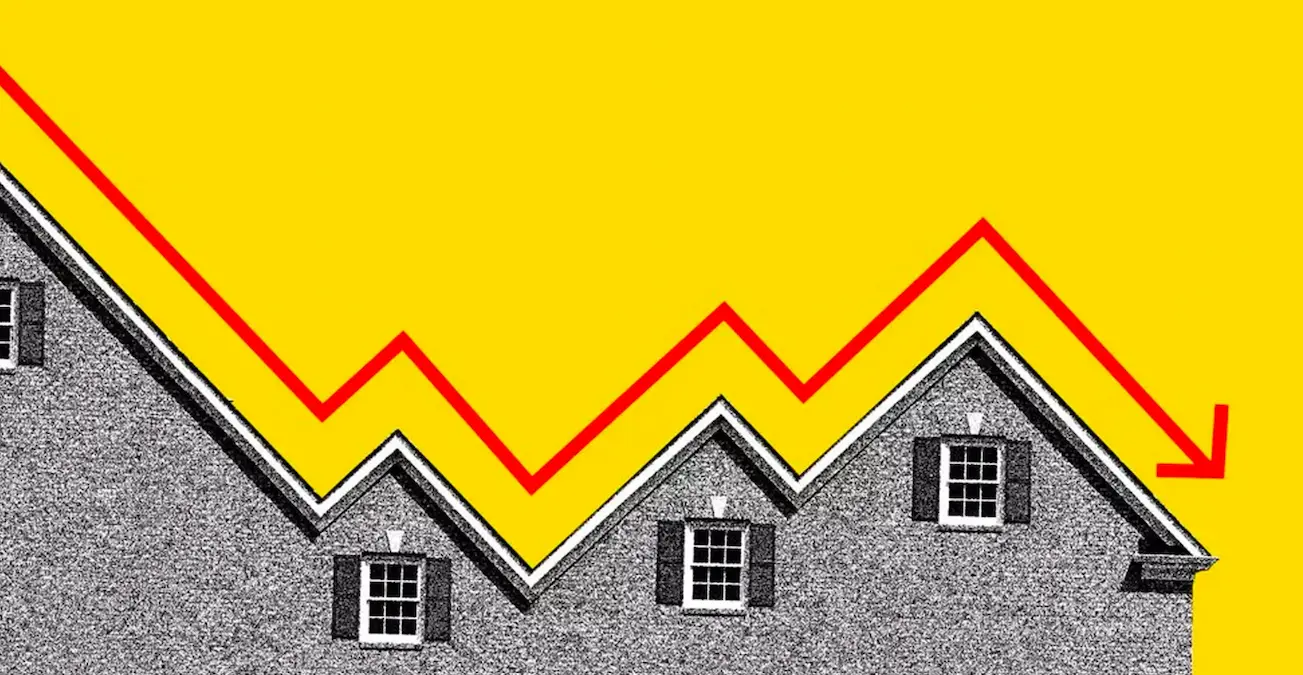
Home prices in Tampa Bay have taken a noticeable dip, reflecting a nationwide divide where values in the South and West are cooling, while the Midwest and Northeast continue to see gains. According to new data from Zillow, the typical home price in Tampa Bay fell to $362,150 this June — a nearly 6% year-over-year drop.
A Tale of Two Housing Markets
The old real estate mantra — “location, location, location” — has never been truer. Across the U.S., half of the country is seeing falling home prices, while the other half experiences steady climbs. This split is driven largely by housing supply. In markets with low inventory and minimal new construction, prices are holding strong. But in areas like Tampa Bay, a glut of available homes is putting downward pressure on values.
Why Tampa Bay is Losing Ground
Tampa Bay’s drop in home values is being fueled by hurricane vulnerability, high insurance costs, and reduced buyer demand. Homes are sitting on the market longer, and fewer people are moving into the region. These same factors are also cooling prices in Jacksonville and Miami.
The situation is similar in other Southern metro areas, particularly in Florida and Texas, where years of rapid new construction have now given way to oversupply. Homeowners, tired of costly climate risks, are listing their properties and moving elsewhere.
Numbers at a Glance
- Tampa Bay: $362,150 typical home value (down 6% YoY)
- Austin metro area: Largest decline nationwide (-5.8%)
- Cleveland metro area: Largest gain nationwide (+4.3%)
- U.S. overall: +0.2% change in typical home values
Typical home values in Tampa Bay still remain about 52% above pre-pandemic levels, despite the recent cooling — a reminder of the price surge sparked by the pandemic homebuying frenzy.
America’s Split Housing Reality
“It’s almost as if America is two countries right now from a housing perspective,” noted Atlantic writer Derek Thompson, highlighting the sharp regional divide. While the Midwest and Northeast hold firm, the South and West are adjusting to new realities — climate risk, changing migration patterns, and post-boom corrections.
For Tampa Bay, that means a more balanced market ahead, but also continued challenges for sellers navigating today’s complex real estate landscape.
The real question: Will Tampa Bay’s market stabilize in 2026, or is this just the start of a longer cooling trend?
Are you on social media? Check out our profile for more local news! Follow @TampaLatest for up-to-the-minute updates in Tampa, Florida.