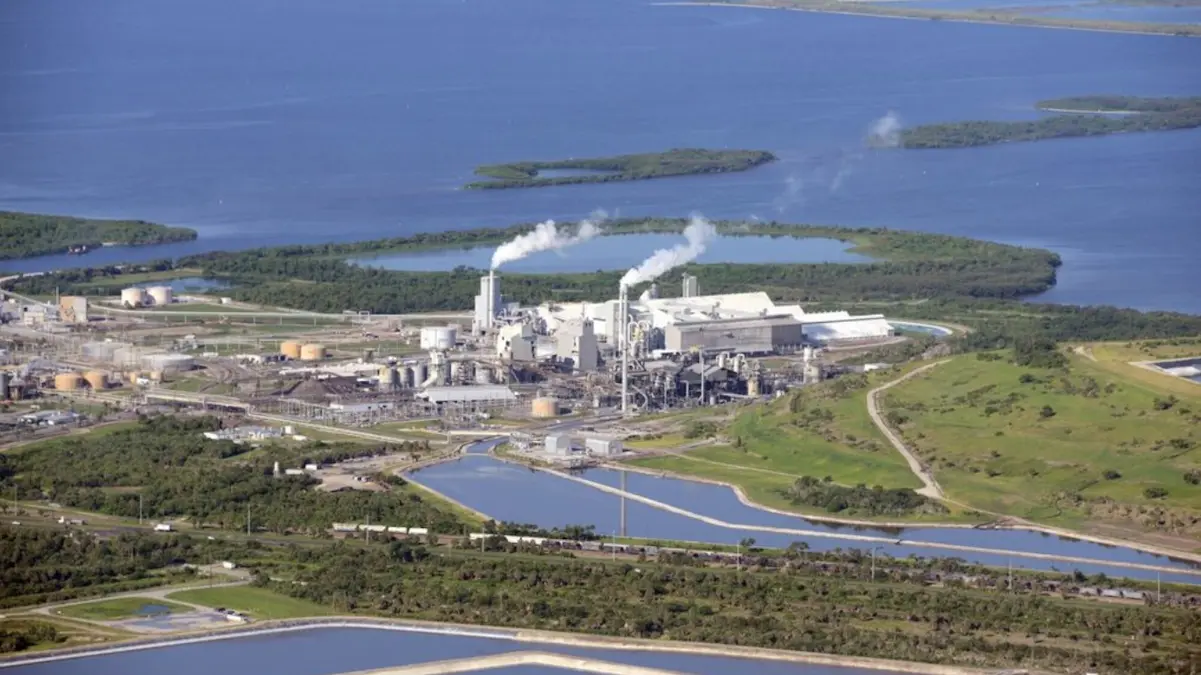
In a bold and “ambitious” move, Tampa-based Mosaic Co.—a global fertilizer giant—has just invested $84 million to plant its footprint deeper into Brazil’s growing agricultural heart. The new storage and distribution facility opened this month in Palmeirante, Tocantins, a region rapidly rising in the global food supply chain.
From the moment you set foot in Palmeirante, it’s easy to see why Mosaic chose this land of red soil and relentless sun. Brazil already accounts for 40% of Mosaic’s global sales and nearly half of its workforce. Now, with this massive new investment, the company is no longer just exporting fertilizers—it’s becoming part of Brazil’s agricultural DNA.
Rails, Ports, and Global Tensions
This isn’t just a warehouse—it’s a logistical powerhouse. With direct rail access to the Port of Itaqui, this facility places Mosaic’s product on a fast track from plant to port, and then onto international markets. The warehouse capacity is significant enough to reshape how Mosaic manages its exports—not just from Brazil, but to the world.
But as Mosaic celebrates, political tension looms. President Donald Trump has warned of a potential 50% tariff on all exports from Brazil, citing “unfair trade practices.” While Brazilian officials remain open to negotiations, the U.S. has yet to respond—leaving companies like Mosaic to brace for uncertainty in the months ahead.
Brazil: Fertilizer and Fortune
Last year alone, Brazil contributed $4.3 billion of Mosaic’s total $11.1 billion in net sales. With 26 operational sites across the country—including five phosphate mines, five chemical plants, and a dozen warehouses—Mosaic is no stranger to the region. However, this latest project signals a shift from presence to dominance.
Earlier this year, Mosaic sold a phosphate mine for $125 million to a local buyer, perhaps to streamline focus toward more strategic locations like Palmeirante. And it’s not just about storage—Fospar, a company in which Mosaic holds a majority stake, gives Mosaic control of a deepwater port, a granulation plant, and a warehouse terminal. This level of integration positions Mosaic to withstand both market fluctuations and geopolitical turbulence.
Forecasting the Future: 6 Million Tonnes and Counting
What does this mean for Mosaic in the long run? According to the company, this facility alone could add 5 to 6 million tonnes to its annual output by 2030. That’s not just a number—it’s a strategy to outpace competitors, even as trade policies shift and climate impacts grow more unpredictable.
The fertilizer industry is a high-stakes game played across global borders, and Mosaic seems determined to win big in Brazil. They’re not planting seeds—they’re planting empires.
A Bigger Picture in Every Granule
It’s easy to think of fertilizer as just a bag of grey dust, but in Brazil, it’s political, economic, and even cultural. Every truckload that leaves the Palmeirante facility tells a story of Tampa innovation, South American ambition, and international strategy. The soil may belong to Brazil, but Mosaic is shaping what grows from it—and who profits.
As geopolitical winds blow unpredictably, will Mosaic’s investment grow into a thriving tree or be shaken by storms yet to come? Only time will tell—but this is one seed that’s been planted deep.
Want more stories like this?
What happens when corporate ambition, geopolitical drama, and agricultural powerhouses collide? We’re just getting started. Stay tuned.
Are you on social media? Check out our profile for more local news! Follow @TampaLatest for up-to-the-minute updates in Tampa, Florida.