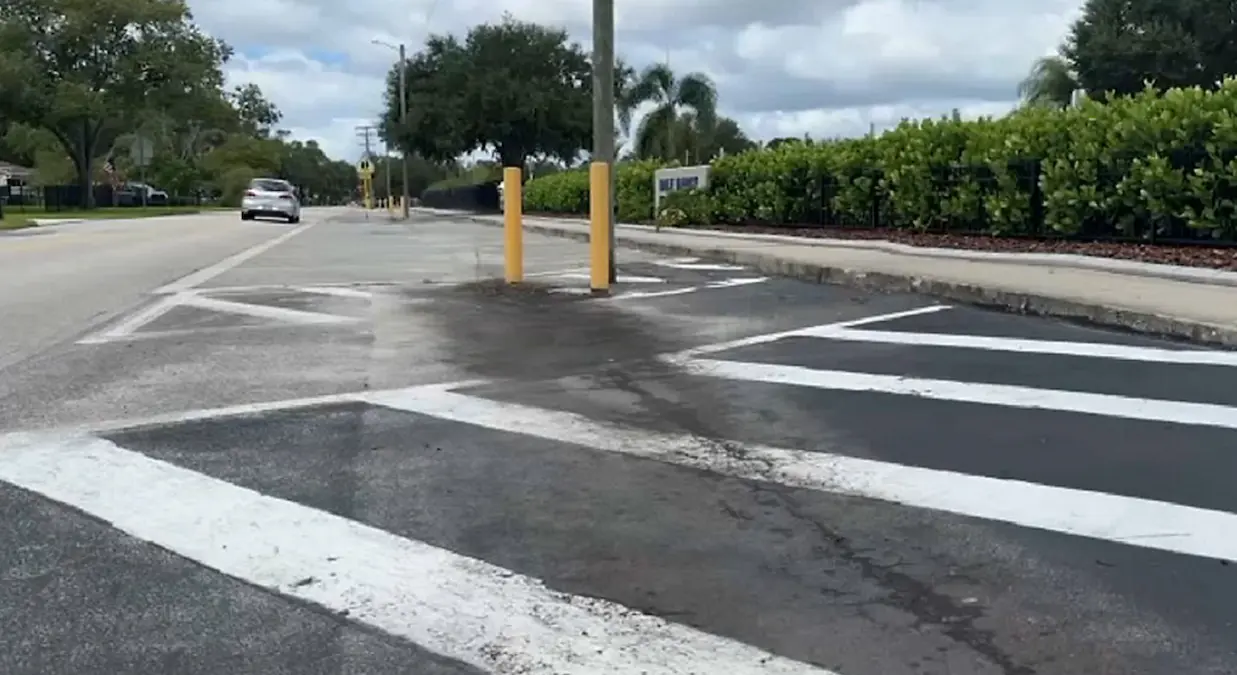
Tampa street art removal has officially concluded, leaving many residents with mixed emotions. Over the Labor Day weekend, the Florida Department of Transportation (FDOT) and the City of Tampa worked together to erase colorful crosswalks and murals from 47 locations across the city.
The Official Decision
“The Florida Department of Transportation (FDOT) has completed the removal of all remaining street artwork across Tampa. To help expedite the process, FDOT crews, working in close coordination with the City of Tampa, spent the Labor Day weekend painting over every remaining piece.”
While these vibrant crosswalks once symbolized pedestrian safety, FDOT cited new state regulations requiring uniformity in roadway markings. According to officials, failure to comply would have jeopardized vital transportation funding for local governments.
For more updates and official statements, visit the Florida Department of Transportation website and follow the City of Tampa on Twitter and Facebook.
Political Context Behind the Removal
The push for removal stems from a law signed by Governor Ron DeSantis, which mandates the elimination of non-standard street murals across Florida. The governor emphasized that the intent was to promote uniformity and safety, warning that municipalities not following the law risked losing state funding for road projects.
Critics, however, argue the law specifically targeted LGBTQ street murals, including the well-known rainbow mural in St. Petersburg. Parents and community advocates also highlight how the enforcement unfairly eliminated educational murals designed to protect children near schools.
Impact on Local Schools
One of the most emotional removals occurred outside Mabry Elementary School, where a mural featuring dolphins, pencils, notebooks, and apples once greeted students. Parents and students are devastated, noting that the mural helped drivers remain cautious in school zones.
Parent Mackenzie Ombres expressed frustration: “We installed these because we wanted our students and campus to be more safe, and for traffic to be aware of our students entering and exiting campus. And now, simply, it’s not there. The safety is not there anymore.”
Her daughter, a fourth grader, added that she was heartbroken to see two years of community effort vanish overnight.
Community Response
Despite the statewide mandate, no local governments have directly challenged the policy. Still, groups of residents have pushed back in symbolic ways, including recoloring crosswalks with rainbow chalk. These grassroots acts highlight the community’s desire to preserve both safety and identity, even when official murals are erased.
Looking Ahead
The removal of Tampa’s murals has sparked an important conversation about public art, community safety, and the balance of state versus local authority. While officials stand by the decision for uniformity, residents continue to question whether something vital was lost in the process.
What’s next for Tampa’s streets? Could public expression find new life through sanctioned projects, or will chalk drawings remain the quiet act of resistance? The story isn’t over—and the colors may yet return.
Are you on social media? Check out our profile for more local news! Follow @TampaLatest for up-to-the-minute updates in Tampa, Florida.